
A Powerful Story – MIDNIGHT
By Sue Weston and Susie Rosenbluth, Two Sues on the Aisle
MIDNIGHT, an original new musical by Todrick Hall, asks the question, ‘What if the life you inherited had belonged to someone else?’ We don’t get to choose the roles we play, only how we play them. MIDNIGHT explores the South during the late 1800s, and the complex relationship between the wealthy plantation owners and their slaves, following the lives of six black and six white characters. The story, told through a score that blends gospel, pop, R&B, rock, folk, and opera, supported by dance, filled the Darryl Roth theater with near-constant motion for the almost 3-hour performance. It was a journey across generations, a continuum of oppression, persecution, and prejudice, fueled by fear and greed.
For us, the underlying message was of acceptance, love, and family. We left the theater with hope for a future of inclusion and acceptance, while understanding that it would be a slow path forward, “No Time Soon (Change Ain’t Coming)” and recognizing the difficulty of walking in someone else’s shoes.
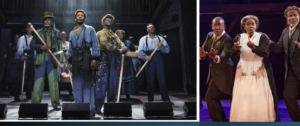
Fearing the Collapse of Social Order
The plantation owners are afraid of losing control, scared that the slaves will take their place in society. To maintain their elevated status, they rob the slaves of humanity and dignity, forcing them to live in poverty, barefoot, sleeping with the animals, and working the fields. Slaves were unable to marry, build families, or learn to write. MIDNIGHT makes this oppression real, focusing on one family. It begins at midnight as a newborn baby, Rail (Todrick Hall), is taken from his mother’s arms. Rail begins life alone after the plantation owner kills his father, then takes his mother to become a Nanny. Through her influence, Richard (Jeremy Beloate) will grow into a sensitive man, reaching beyond the racial divide.
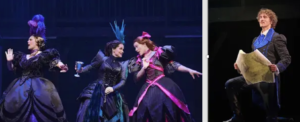
This irrational fear of being pushed aside, replaced, and surpassed is used to justify the treatment of the slaves, seeing them as sub-humans who are ‘owned’ and subjected to brutal punishment. They feared that the slaves would exact retribution if they were free. MIDNIGHT suggests that this brutality is associated with social status rather than skin color. The dominant group, which is afraid of being displaced and views the others as a threat that must be eliminated and controlled. In the South, laws and social order were used to maintain order, preventing slaves and owners from interacting, fostering a separate and unequal society. No surprise that the slaves felt that their masters were pampered, childish, and lazy, whispering about their behaviors in private for fear of punishment.
Richard dares to disrupt the status quo, using Rail to help him expand the plantation, teaching him to write, and forming a friendship. The daily exchange “Hello, good morning… it’s a new day!” takes on a new meaning, becoming a cheery exchange between black and white laborers, promising hope for change.
The Performance
Hall covers many related issues, beginning with the slave/master relationship, then extending to brotherly friendship and love. Family secrets will be revealed, adding unexpected plot twists.
MIDNIGHT provides historic context, building on the number 12, connecting it to the collapse of the plantation system in 1865 and the constitutional abolition of slavery under the Thirteenth Amendment. 12 is connected to the banning of relationships between blacks and whites, and finally, the legalization of same sex marriages. Quoting dates and numbers emphasizes the impact and slow speed of change.
While all the individual elements fit neatly together, the production could have been tightened to flow more smoothly and quickly. MIDNIGHT relies on a narrator, Ethel (Ayana George), whose voice left the audience entranced. A powerhouse of vocalists and high-energy choreography creates a spectacular performance, but just missing its ‘got ya’ moment that would crystallize a call to action. The storyline is complicated by a plethora of characters. Had these themes been handled as background events, the show could have maintained a tighter focus, which will serve it well as it moves to a bigger venue (and it will).
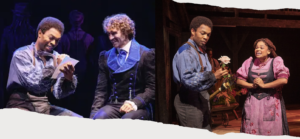
Resonating Themes
MIDNIGHT reminds us of the restrictive, brutal, and exclusionary behaviors used to maintain a society in a status quo, suggesting that power can corrupt and lead to racism, antisemitism, islamophobia, ageism, and homophobia, where one group denies another’s rights to exist.
MIDNIGHT is a powerful new musical that packs a punch. A performance to be remembered for delivering explosive vocals, exceptional performances, and a compelling story, showing the ability to overcome hatred. Hall outdid himself, creating a vision and executing against it as writer, lyricist, composer, and performer, a man with a mission to help society see past ourselves and imagine what could be.
MIDNIGHT at Darryl Roth Theater through November 8
Related Posts
-
 25 Years Later – Come From Away
Posted on Sep 19, 2026
-
 Would That Going Bacharach Went Somewhere
Posted on Sep 2, 2026
-
 A Walk on the Moon: The Summer of ’69 as Metaphor
Posted on Jul 24, 2026
-
 We’ll Meet Again – A Musical – Inspired by a True Story
Posted on Jun 21, 2026
Tags
Share This


